
01 Dec 2020

Extended reality technology developer will create interactive experience for the U.S. Capitol Visitor Center

WASHINGTON – Dec. 1, 2020 – The U.S. Architect of the Capitol selected Envision Innovative Solutions, Inc., to create interactive, media-rich, and immersive user experiences for eight statues in the Capitol Visitor Center. Envision will bring the statues to life, including the 15,000-pound plaster model of the Statue of Freedom, using Augmented Reality (AR) that overlays objects with 3D graphics, animation, data, and other media, when using a smartphone, tablet, or wearable device. Public release of the application is expected in Summer 2021.

Visitors who want to experience the AR technology inside the U.S. Capitol Visitor Center only need an Apple or Android mobile device to access the app that Envision will develop. Interactions through the app will be triggered by recognizing real-world items through the rear-facing cameras of mobile devices. Such technology allows users to observe animation about the lives, legacies, and meanings of each statue in Emancipation Hall—providing an educational experience for students, friends, and family.

“We are delighted to have won the U.S. Architect of the Capitol contract to enhance the visitor experience at the Capitol Visitor Center,” said Envision President and CEO, Alexander Cortez, Jr. “Envision’s AR technology will give visitors the ability to interact with historical exhibits in a way that would be impossible in the purely physical world.”

About Envision Innovative Solutions

Established in 2006, Envision Innovative Solutions is a leading technology developer in the field of eXtended Reality (XR)—the umbrella technology branding that includes augmented, virtual, and mixed reality. Other Envision extended reality clients include Fortune-100 energy corporations and educational institutions, including K-12 and higher education. Envision XR is highly focused on immersive training and education, simulation, and real-time learning. For nearly two decades, Envision has been an industry leader in software development, systems engineering and integration, and managed IT services for the U.S. Departments of Defense and Interior. Additionally, Envision offers remote virtual education and tutoring services, including XR, to help combat the educational sector loss of in-person learning and hands-on lab exercises due to COVID-19 circumstances and closures. Learn more about Envision’s extended reality technology at envision-is.com/xr.

###

CONTACT
Envision Innovative Solutions, Inc.
Jonathan Carr, Research and Development
(732) 722-7435
jonathan.carr@envision-is.com

21 Sep 2020

Envision is proud to announce our selection to develop a Virtual Reality (VR) cybersecurity facility for the National Security Agency’s (NSA) schoolhouse known as the National Centers of Academic Excellence-Cybersecurity (NCAE-C). The VR application will be deployed within the NSA NCAE-C Regions Investing in the Next Generation (RING) program which will reach over 400 schools in the US.

The VR project will be funded by a NSA NCAE-C RING grant, through Moraine Valley Community College. It will feature an ultra-realistic cyber security facility comprised of seven special purpose rooms spread over three floors. The application will offer a realistic immersive experience for students interested in entering the field of cybersecurity. Users will explore room-by-room to discover employee roles, educational pathways, and flags hidden throughout the facility—which better prepare students what to expect when they graduate with a cybersecurity focus and enter the workforce.

10 Oct 2019

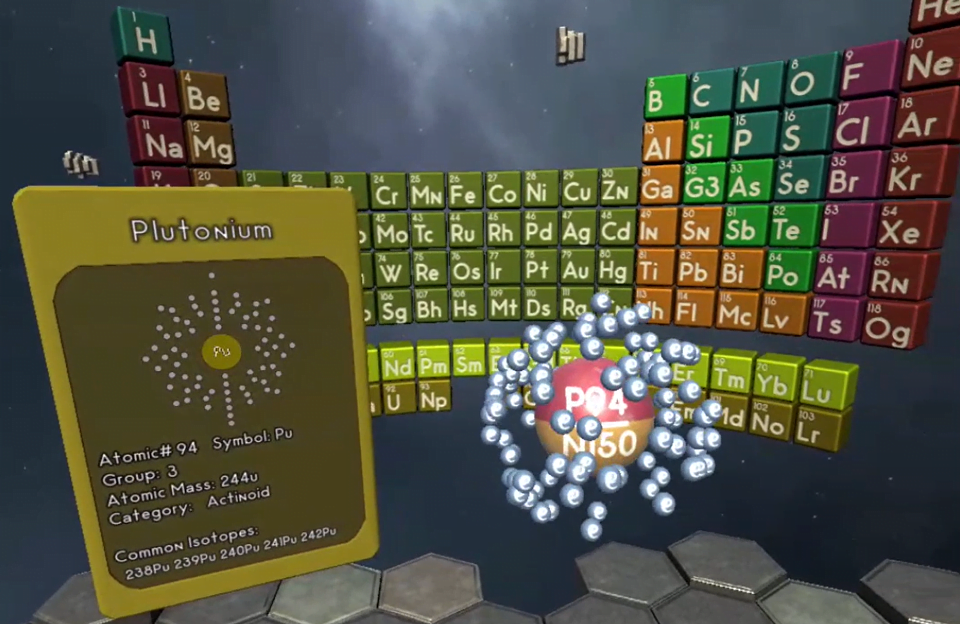
Envision is proud to announce the development of a VR application called ELEMENTS to be sold in Hamilton Buhl’s educational product line. The VR application will focus on the periodic table of elements for use in chemistry classrooms for the K-12 age range. The application will feature the use of Oculus Quest/Quest 2’s standalone functionality with innovative hands-free gestures to navigate the experience. Students will both learn about the elements and take quizzes to capture the enhanced knowledge retention and learning that comes with the use of VR in the classroom.

23 May 2019

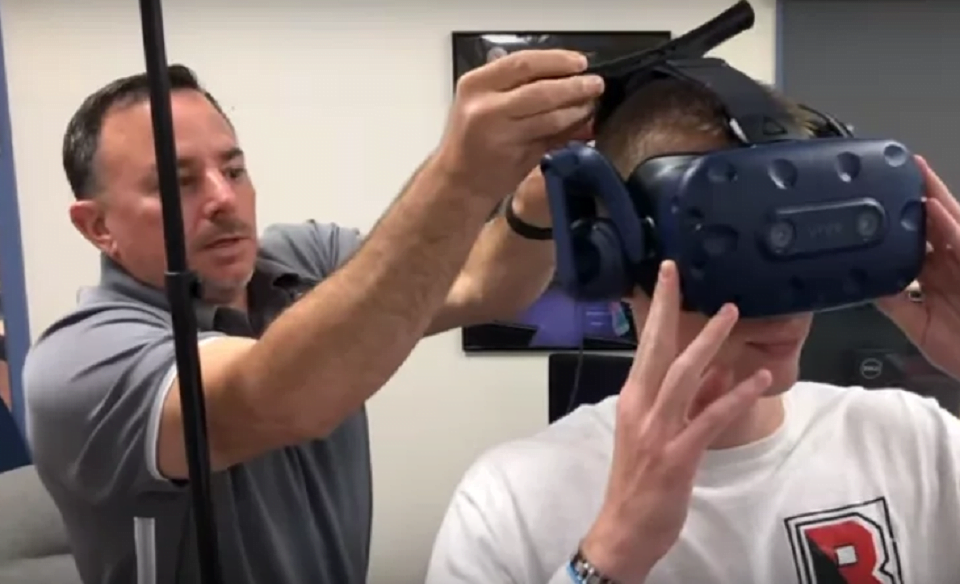
Envision is proud to announce our selection to develop a Virtual Reality (VR) Simulator for the Burlington County Institute of Technology (BCIT) Law and Public Safety Program, for use in its forensic science courses administered at two physical campuses in New Jersey. Up until now, BCIT’s forensic science courses utilized a physical room containing physical props and mannequins to simulate a forensic crime scene. This configuration produced the following negative issues:

  1. The physical crime scene room was not realistic. It was composed of 4 walls, a ceiling, and floor that was like other parts of the school building. It lacked the surrealness that a forensic crime scene investigator would encounter in the real world.
  2. The mannequin, which represented a murder victim, did not feature realistic wounds and was located in the same place for every student exercise.
  3. Only one student at a time could use the physical crime scene room.

Envision will develop 10 unique and immersive forensic crime scenes and a forensic crime lab experience to end each crime scene experience. The 10 unique forensic crime scenes each take place in a different environment, ranging from urban to suburban to rural and during both day and night. The VR crime scenes will feature rich and complex 360-degree 3D background environments with ultra-realistic color, texturing, lighting, and shadowing. Each crime scene has a unique soundtrack to realistically distract the student investigator. For example, the urban city alley crime scene will feature automotive sounds like horns, tires spinning on road surfaces, and multiple engine hum.

Envision will implement an innovative menu system of tools for the VR investigator to use such as an in-VR experience camera, a magnifying glass, crime scene tape to measure and cut, proper evidence containers for both wet and dry evidence as well as murder weapons, measuring devices, ground chalk, headlamp, and gloves. The user will access this tool menu using innovative slide out story board panels. The VR experience is 6 Degrees of Freedom (6Dof) which allows the user to physically walk around a pre-defined barrier physical space to collect evidence. Once the user has collected all of the evidence, they will proceed to the VR forensic crime lab. Inside the VR crime lab, the user will be presented with a different set of tools such as ultraviolet fingerprint flashlights, memory card readers, DNA storage bins, and a virtual PC to view the photographs they took while in the VR experience. All actions of the entire VR forensic simulator experience will be logged and sent to the instructor for post-exercise evaluation.

25 Mar 2019

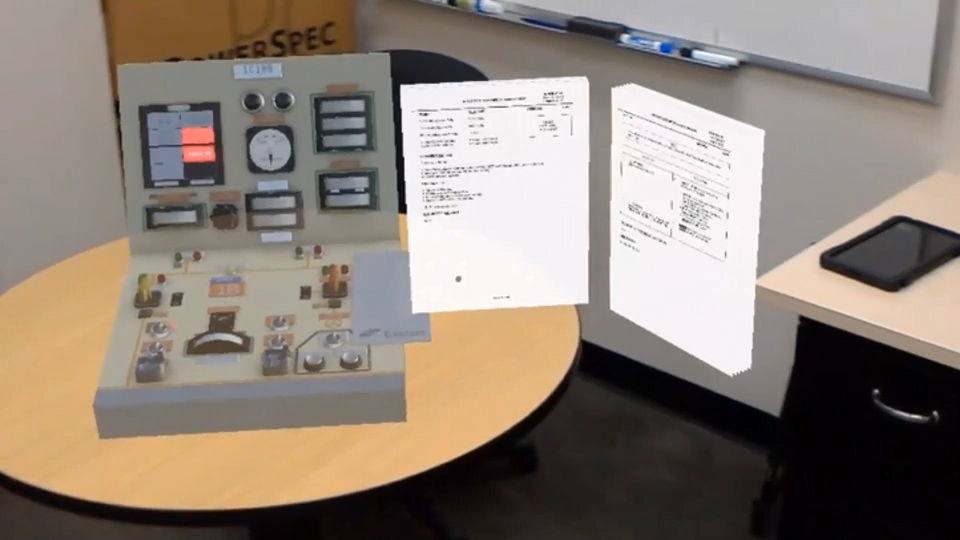
Envision is proud to announce our selection to develop an Augmented Reality (AR) iOS and HoloLens application for Exelon Corporation’s The Future of Learning Program. The application will tackle both the costly expense of training and nuclear operator training room bottlenecking that occurs from workforce size.

Our AR solution will address the needs of Exelon by providing a feasible method of training and simulation that any trainee can use either on-site or remotely via phone, tablet, or headset, most importantly outside of the physical nuclear training operating room. The use of our AR app at Exelon will result in trainees conducting more efficient training experiences in the actual physical simulator by eliminating the problems of time-consuming familiarization and orientation.